
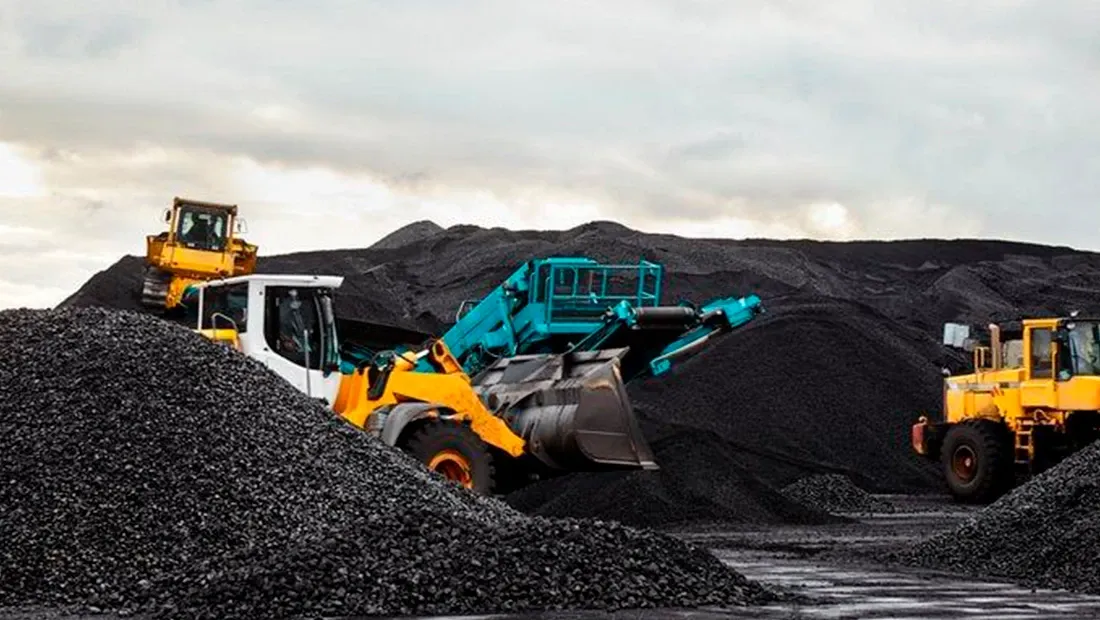
Colombian coke traceability
Coke is made from metallurgical coal and is mostly exported. This is how the Mineral Traceability Platform (PTM) keeps the trail from the coal to the coke you buy.
Updated on
 MinTrace is an Technology Operator for Mineral Traceability (OTTM) authorized by the National Mining Agency (ANM)
Why it matters
Coke is not extracted from a mine: it is manufactured. It does not appear in the list of mining titles or in royalty declarations, but the PTM gives it its own code, CK, in the coding table of the technical annex of ANM Resolution 759 of 2024 (opens in a new tab). Its traceability depends on the metallurgical coal that enters the oven having its certificate of origin, and on each transformation being reported with its loss.
It is also an export product. According to Bulletin 26, "Minería en cifras", of Colombia's Mining and Energy Planning Unit (UPME), February 2026 (opens in a new tab), coke represented 7.1 % of the value of Colombia's mining exports in 2025, which totalled USD 11,356 million FOB (free on board).
A Technology Operator for Mineral Traceability (OTTM) is a company authorized by Colombia's National Mining Agency (ANM) to record and transmit mineral trading transactions to the Mineral Traceability Platform (PTM), under ANM Resolution 759 of 2024.
What it is and what it is used for
The Mining Technical Glossary (opens in a new tab) defines coke as a strong, porous material obtained from the dry distillation of coal at high temperature and without air, a process called coking. It still contains more than 90 % carbon. The glossary distinguishes high-temperature coke, from pyrolysis above 900 °C, from low-temperature coke, below 700 °C.
Its main use is steelmaking. According to the UPME metallurgical coal balance (opens in a new tab), steel production requires coke as a raw material, and in the period it analyses (data from 2012 to 2016, with projections to 2035) almost all the coke produced in Colombia was exported. The same document estimates that one tonne of metallurgical coal yields between 0.65 and 0.73 tonnes of coke, with 5 % to 10 % residues.
Where it comes from in Colombia
According to the UPME bulletin, the coke exported in 2025 came from Norte de Santander (41.4 %), Boyacá (38.5 %) and Cundinamarca (15.7 %), the same departments as metallurgical coal. Its main destinations were Brazil (43.8 %), India (10.1 %) and the United Kingdom (9.6 %).
It was a downward year: compared with 2024, the quantity exported fell 6.8 % and its value 26.2 %, which the same bulletin attributes to the global oversupply of steel.
How it is recorded in the PTM
The coke chain starts before the coke plant. The metallurgical coal title holder reports its production and sales, and any trader in between records its purchases and sales. The coke plant records the purchase of coal when the invoice is issued and, when it closes each coking process, reports the transformation.
In that report, according to the technical annex, the coke plant states the code of the certificate of origin that holds the coal consumed and the quantity taken from it, the derived product (coke, CK), its quantity and the loss. The PTM deducts the coal balance and updates the coke balance, which is the one later sold in Colombia or exported.
What MinTrace records for your supplier
MinTrace keeps the coal inventory with the certificate of origin of each purchase and, when a coking process closes, calculates the loss between the coal consumed and the coke obtained before reporting the transformation. The coke balance is then available for domestic and export sales.
For coke plants that run SAP, MinTrace On SAP takes the goods receipt (MIGO, movement type 101) as production, movement type 102 as loss and the billing document as the sale, and sends each event to the PTM when it is due.
Questions to ask your Colombian supplier
Which OTTM do you use to record your transactions in the PTM?
Which coal purchases, with which certificates of origin, fed the batches in this shipment?
Are your coking processes reported to the PTM as transformations with their loss?
Can you share the acceptance code of the international closing?
From what date is recording in the PTM mandatory for your category?
Authorized by Colombia's National Mining Agency (ANM)
MinTrace is a Technology Operator for Mineral Traceability (OTTM) authorized by Colombia's National Mining Agency (ANM) since December 17, 2025 (filing number 20253210663711).
Questions about a Colombian supplier?
Our team can explain what a MinTrace record contains and how to read it.
Frequently asked questions
Why does coke not appear in the Single Registry of Mineral Traders (RUCOM)?
Because neither the RUCOM catalogue of denominations nor the royalty declarations include one for coke: it is a product of transforming metallurgical coal, not of exploiting a mining title. Even so, the PTM gives it the code CK, and the coke plant records each transformation and each sale there.
How much metallurgical coal is needed to produce one tonne of coke?
On average, 1.6 tonnes, according to a 2011 UPME study cited in its metallurgical coal balance. Seen from the coal side, each tonne yields between 0.65 and 0.73 tonnes of coke, plus residues. The difference between the coal consumed and the coke obtained is the loss reported to the PTM when the transformation closes.