
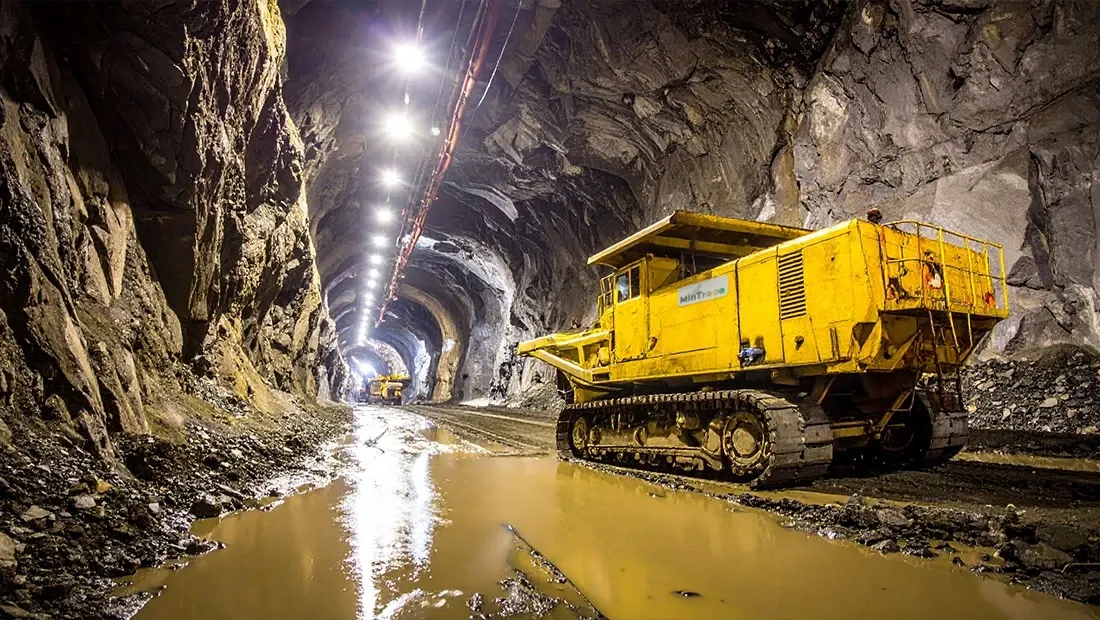
Colombian ferronickel traceability
Colombian nickel is exported as ferronickel, smelted in the country. This is how the chain is recorded in the Mineral Traceability Platform (PTM) and what you can ask your supplier.
Updated on
 MinTrace is an Technology Operator for Mineral Traceability (OTTM) authorized by the National Mining Agency (ANM)
Why it matters
In exports, Colombian nickel appears as ferronickel: the ore is smelted in the country and leaves as that product. Its chain in the PTM has few mining titles and large volumes, and almost everything happens within the same operation: production, transformation into ferronickel and export.
According to Bulletin 26, "Minería en cifras", of Colombia's Mining and Energy Planning Unit (UPME), February 2026 (opens in a new tab), ferronickel accounted for 4.2 % of Colombia's mining exports in 2025, with USD 475 million FOB (free on board) compared with USD 542 million in 2024. Nickel is also a mineral of strategic interest under ANM Resolution 1006 of 2023 (opens in a new tab).
A Technology Operator for Mineral Traceability (OTTM) is a company authorized by Colombia's National Mining Agency (ANM) to record and transmit mineral trading transactions to the Mineral Traceability Platform (PTM), under ANM Resolution 759 of 2024.
What it is and what it is used for
The Mining Technical Glossary (opens in a new tab) explains that nickel, chromium and cobalt can concentrate into ore in laterites, soils enriched in iron oxides and hydroxides by the weathering of ultrabasic rocks, and cites the Cerro Matoso deposit in Colombia, a nickel laterite, as an example.
According to the U.S. Geological Survey (USGS), Mineral Commodity Summaries 2025 (opens in a new tab), primary nickel in that country is used mainly in stainless steel and alloys, usually more than 85 % of consumption, as well as in electroplating, catalysts and chemicals.
Where it comes from in Colombia
Royalties for nickel are declared in pounds and come from Córdoba.
Exports follow the same map: according to the UPME bulletin, 97.1 % of the ferronickel exported in 2025 left from Córdoba. Asia received 70.9 % and Europe 25.6 %, with China (57.6 %) as the main destination. The quantity exported fell 4.6 % compared with 2024 and its value 12.3 %; the bulletin links this to the global oversupply of nickel from new smelters in Indonesia and to international prices that averaged USD 15,149 per tonne.
How it is recorded in the PTM
The mining title holder reports production when the ore enters its inventory. When each smelting process closes, it reports the transformation: the nickel ore consumed as the source product, the ferronickel obtained as the derived product, and the loss. Each ferronickel sale is reported when invoiced; when the buyer is abroad, the sale is an international closing, with the currency, the representative market exchange rate (TRM) and the buyer's details.
In a smelter, the loss matters. The glossary defines slag as the glassy mass that results from melting and refining metals and holds most of the impurities of the raw material. The technical annex of ANM Resolution 759 of 2024 (opens in a new tab) rejects a transformation when the source quantity does not equal the derived products plus the loss (error 400062). Units matter too: pounds are not among the units the PTM accepts, so quantities are converted to tonnes or kilograms.
What MinTrace records for your supplier
MinTrace On SAP takes the goods receipt (MIGO, movement type 101) as the production report and movement type 102 as loss, and sends the transformation to the PTM when the process closes. MinTrace calculates the loss between the ore consumed and the ferronickel obtained, so the balance adds up before it is sent.
For the export, the international closing is recorded with the currency, the TRM and the buyer's details, and the certificate of origin of the ore stays linked to the operation with its SHA-256 fingerprint.
Questions to ask your Colombian supplier
Which OTTM do you use to record your transactions in the PTM?
Is each smelting process reported to the PTM as a transformation with its loss?
Can you share the acceptance code of the international closing for this shipment?
In which unit are your quantities reported, and how do they reconcile with your royalty declarations?
From what date is recording in the PTM mandatory for your category?
Authorized by Colombia's National Mining Agency (ANM)
MinTrace is a Technology Operator for Mineral Traceability (OTTM) authorized by Colombia's National Mining Agency (ANM) since December 17, 2025 (filing number 20253210663711).
Questions about a Colombian supplier?
Our team can explain what a MinTrace record contains and how to read it.
Frequently asked questions
Is ferronickel recorded as a different mineral from nickel?
Not as a separate mineral: ferronickel is the derived product of the nickel chain. It is recorded in the PTM as the result of a transformation, with nickel ore as the source product and the smelting loss. The Single Registry of Mineral Traders (RUCOM) denominations for this chain are those of nickel ores.
In which unit is nickel recorded in the PTM?
In a mass unit from the table of the technical annex, such as tonnes or kilograms. Nickel royalties are declared in pounds, which the PTM does not accept, so quantities are converted before reporting, using the same unit for production, transformation and sale so that the balance adds up.